How to choose your EPM solution? The complete guide (with interactive comparator)
2026 comparative guide with interactive comparator
How to choose the right EPM solution? This complete guide breaks down the essential criteria (budget, integration, timeline) and offers an interactive comparator of the 6 leading solutions on the market to help finance leaders make an informed choice.
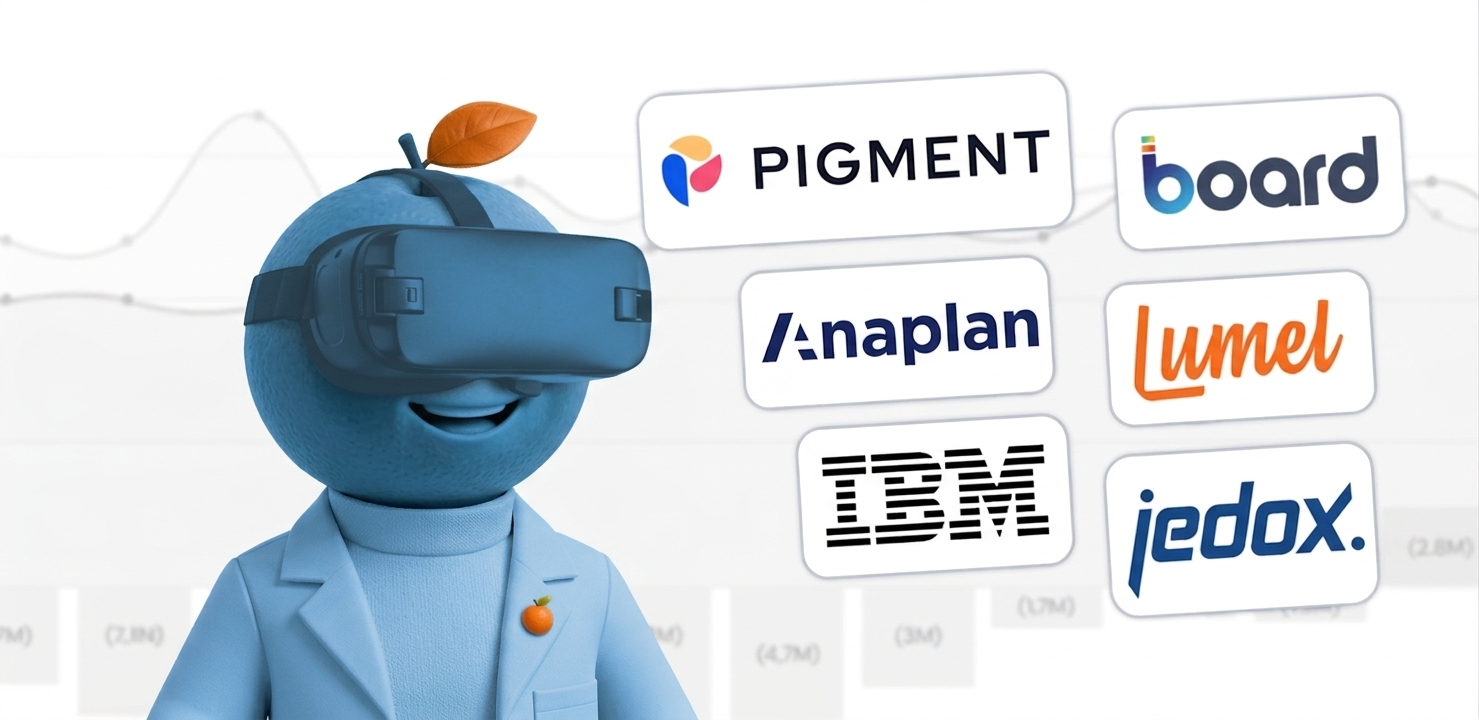
Relying on solid data to effectively inform strategic choices in a chaotic context: more than ever, financial and general management need reliability, speed, and vision. And that's precisely what an EPM (Enterprise Performance Management) solution provides… when it's well chosen. Because (almost) all EPM solutions are equal, but some are more suited to your needs, your working methods, your context. This guide aims to provide you with a structured, pragmatic and objective understanding of: what an EPM solution is truly for, how to evaluate it (using our interactive comparator of 6 of the main solutions on the market ), and how to make an informed choice, without skipping steps. Summary What is an EPM solution for? Evaluating EPMs: key criteria 5 steps to choose your solution well Presentation of PerfectSight's EPM solutions benchmark Access the comparator The fundamentals: what is an EPM solution for? Definition and role of EPM Enterprise Performance Management refers to all processes, methods and tools that allow an organization to plan, manage, analyze and improve its performance. An EPM solution typically covers: financial planning (budget, forecast, rolling forecast), consolidation and reporting, performance analysis and scenario simulation, alignment between strategy, finance and operations. ERP, BI, EPM: three complementary tools ERP: transactional system, execution-oriented (accounting, purchasing, sales). EPM: management tool, oriented towards planning, simulation, projection and arbitration. BI: analysis and visualization tool, oriented towards data reading and restitution. Manage daily operations Drive performance & inform strategy Restitute & analyze data An EPM is not just a reporting, planning, or business intelligence tool: it is a management foundation for decision-making. It complements ERP and BI, and relies on them to give meaning and perspective to data. What an EPM brings to the finance department For a finance department, a well-chosen EPM solution notably allows to: ensure data reliability and reduce manual reprocessing, accelerate budget and forecasting cycles, strengthen analysis and anticipation capabilities, improve collaboration between finance, business units, and general management, transition from past-driven management to prospective management. Choosing an EPM should not (only) be based on technological criteria: organizational and decision-making considerations are at least as important. Evaluating an EPM solution: what are the key criteria? Key features This is the most obvious comparison key: an EPM solution must cover a robust, complete, yet adaptable functional core. When evaluating the functionalities offered by your future tool, you must ensure that it meets your current needs… and that it will allow you to add layers of analysis, reporting, and forecasting in year 2, 3, 4… Here are the main features to evaluate (our EPM solution comparator details them further): Modeling Ability to represent the company's financial structure, management rules, analytical dimensions and allocation logics. Planning & forecasting Budgets, reforecasts and rolling forecasts, multi-scenario planning, with a balance between flexibility and control. Consolidation, reporting, automation Production of financial statements, automation of flows, traceability, reduction of closing times. Scenarios & predictive analysis (AI) Scenario simulation, what-if analyses, variance detection, contributions of AI to anticipate rather than just observe. Ergonomics and collaboration Ergonomics is a key success factor often underestimated. An EPM solution only creates value if it is adopted by the teams. In your benchmark, you must therefore evaluate whether: interfaces are intuitive enough, the contribution of operational staff (especially outside finance and management control) is facilitated, workflows are clear, the reporting is readable for decision-makers. Views of the interfaces of Jedox (left) and Pigment (right) Integration, security and governance These are often topics that are left aside when evaluating a solution from the user's perspective. And this is a double mistake: without integration into the company's IT ecosystem (ERP, CRM, HRIS…), the EPM immediately loses one of its main assets: the ability to work directly with operational data, without compliance (cybersecurity, GDPR…), you run the risk of having your choice rejected by the IT department. Here are the points to watch out for when comparing EPM solutions: connection methods to other “business” solutions (off-the-shelf APIs or those to be entrusted to an integrator, automation platforms like Make or n8n), rights and roles management (access security, authorization settings…), data traceability and auditability, compliance with IT security and governance requirements. Scalability, costs and TCO Beyond the license cost, it is essential to evaluate: the ability to scale up, integration and evolution costs, maintenance, the internal effort required (especially user training). A precise calculation of the TCO (Total Cost of Ownership) should allow you to integrate all these elements, and give you a fairer idea of the “true” price of the evaluated solutions. Choosing your EPM solution: a method, 5 steps With dozens of xP&A solution integrations under our belt, we have identified the key success… and failure factors of an EPM project. What should absolutely be avoided? Focusing on the tool rather than its uses Underestimating resistance to change (or minimizing the importance of team adoption) Neglecting the IT dimension (or including the IT department too late in the project). This methodology will help you avoid these major pitfalls. Step 1: Formalize your business and financial needs Before shortlisting 2, 3, 4 EPMs and scoring them with our exclusive comparator, there is a prerequisite: objectifying and weighting your future selection criteria. Because without a clear prioritization of criteria, future